
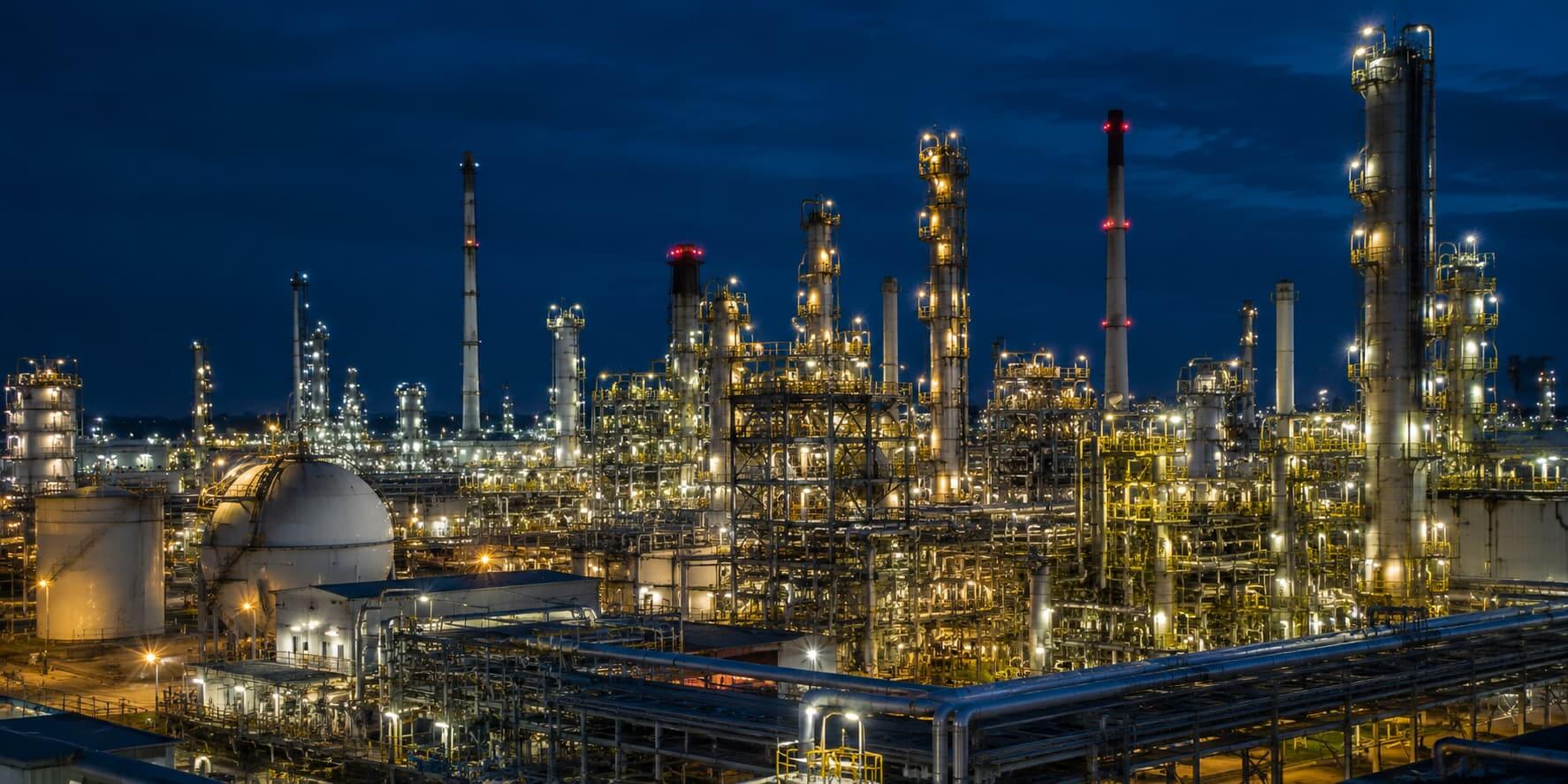
Across much of the global chemical industry, the market is undergoing a broader structural shift.
While chemicals has always been cyclical, many of the challenges and strategic decisions businesses are now navigating feel more interconnected, more operationally significant, and more long-term than previous downturns.
The industry remains highly innovative and globally important.
However, pressure is now building simultaneously across:
-
-
- manufacturing competitiveness
- energy costs
- global supply chains
- regulation
- technological change
- sustainability
- geopolitical uncertainty
- and organisational capability
-
As a result, many chemical manufacturers and distributors are fundamentally reassessing how they operate, where they invest, and how future growth will be achieved.
The Industry Remains Under Pressure
Heading into 2025 and 2026, many across the industry anticipated a stronger recovery.
Instead, weak demand, global overcapacity, and continued geopolitical uncertainty have kept pressure on margins across many parts of the market.
Commodity chemicals continue facing challenging market conditions globally.
At the same time, several sectors continue showing relative resilience, including:
-
-
- specialty chemicals
- electronics chemicals
- semiconductor-related materials
- pharma and nutraceutical ingredients
- agricultural chemicals
- and clean technology materials
-
As a result, many organisations continue moving further downstream toward higher-value applications, customer-specific solutions, and technically differentiated products.
Europe Is Facing Significant Competitiveness Challenges
Europe remains one of the biggest strategic concerns across the industry.
Many producers continue facing:
-
-
- high energy costs
- expensive manufacturing environments
- regulatory complexity
- and increasing competitive pressure from North America and Asia
-
This has already contributed to:
-
-
- restructuring activity
- plant closures
- portfolio rationalisation
- and wider strategic reassessment across parts of the market
-
At the same time, businesses continue balancing decarbonisation goals alongside competitiveness, profitability, and manufacturing resilience.
The wider strategic discussion increasingly centres around:
-
-
- energy security
- regional supply chain resilience
- critical chemical production
- and long-term industrial competitiveness
-
China Continues Expanding Global Influence
China now represents a significant proportion of global chemical manufacturing capacity and continues accounting for a substantial share of new capacity expansion.
This is increasing:
-
-
- pricing pressure
- oversupply
- margin compression
- and competitiveness challenges globally
-
As a result, many Western and Asian producers are increasingly focusing on:
-
-
- specialty products
- application expertise
- customer intimacy
- technical support
- innovation
- and differentiated commercial capability
-
rather than competing purely on manufacturing scale and price.
AI and Digitalisation Are Becoming Operational Priorities
AI is no longer viewed purely as a future discussion across chemicals.
Manufacturers and distributors are increasingly exploring AI across:
-
-
- forecasting
- procurement
- logistics
- predictive maintenance
- production optimisation
- regulatory management
- and commercial intelligence
-
There is also growing focus on:
-
-
- digital supply chain visibility
- AI-supported formulation work
- autonomous manufacturing systems
- and leaner operating models
-
Particularly within distribution, AI-driven pricing, inventory forecasting, and customer targeting are becoming increasingly important competitive differentiators.
PFAS Regulation Is Reshaping Parts of the Industry
PFAS regulation has become one of the defining strategic issues across multiple sectors of the chemical industry.
Increasing regulation is already influencing:
-
-
- coatings
- electronics
- personal care
- industrial manufacturing
- lubricants
- packaging
- textiles
- and construction materials
-
This is creating:
-
-
- reformulation projects
- supply chain reviews
- increased regulatory pressure
- technical reassessment
- and strategic portfolio discussions
-
For many organisations, PFAS exposure is now viewed both as a regulatory challenge and as an opportunity for alternative technologies and product development.
Sustainability Remains Important — But the Tone Has Changed
The industry remains heavily focused on:
-
-
- decarbonisation
- circularity
- recycling
- bio-based feedstocks
- and sustainable formulations
-
However, compared with several years ago, the discussion has become noticeably more commercially grounded.
Businesses are increasingly asking:
-
-
- Can this scale?
- Can it remain commercially viable?
- Can customers absorb the cost?
- What regulation is realistically coming?
- How quickly can implementation happen?
-
As a result, the conversation increasingly centres around:
-
-
- resilience
- profitability
- practical implementation
- and commercially sustainable transition strategies
-
Distribution Businesses Are Becoming More Strategic
Distribution businesses are also continuing to evolve significantly.
Customers increasingly expect:
-
-
- application support
- formulation guidance
- sustainability insight
- regulatory understanding
- technical problem solving
- and commercially aligned partnership
-
rather than purely transactional product supply.
At the same time, recent supply chain disruption has reinforced the importance of:
-
-
- local stockholding
- supplier diversification
- dual sourcing
- and resilient logistics networks
-
As a result, many distributors continue investing further into technical-commercial capability, application support, and specialist market expertise.
The Industry Is Quietly Restructuring Itself
If you zoom out across the wider market, several broad themes are becoming increasingly clear.
The industry appears to be moving toward:
-
-
- more specialty-focused business models
- greater technical-commercial integration
- regionalisation of supply chains
- more cautious investment strategies
- increased use of AI and digitalisation
- stronger regulatory pressure
- continued restructuring across Europe
- continued Asian manufacturing expansion
- and greater emphasis on resilience over pure cost optimisation
-
As these structural shifts continue, organisational capability itself is becoming increasingly important.
Across both manufacturing and distribution, many businesses are reassessing not only what products they sell and where they operate — but also what type of technical, commercial, operational, and leadership capability will be required to remain competitive over the coming decade.
At Laborare Group Limited, we support organisations across global chemical and specialty ingredient markets through targeted search, international hiring support, and commercially aligned talent engagement across leadership, technical, and commercial functions.